Reflections on Artificial Intelligence
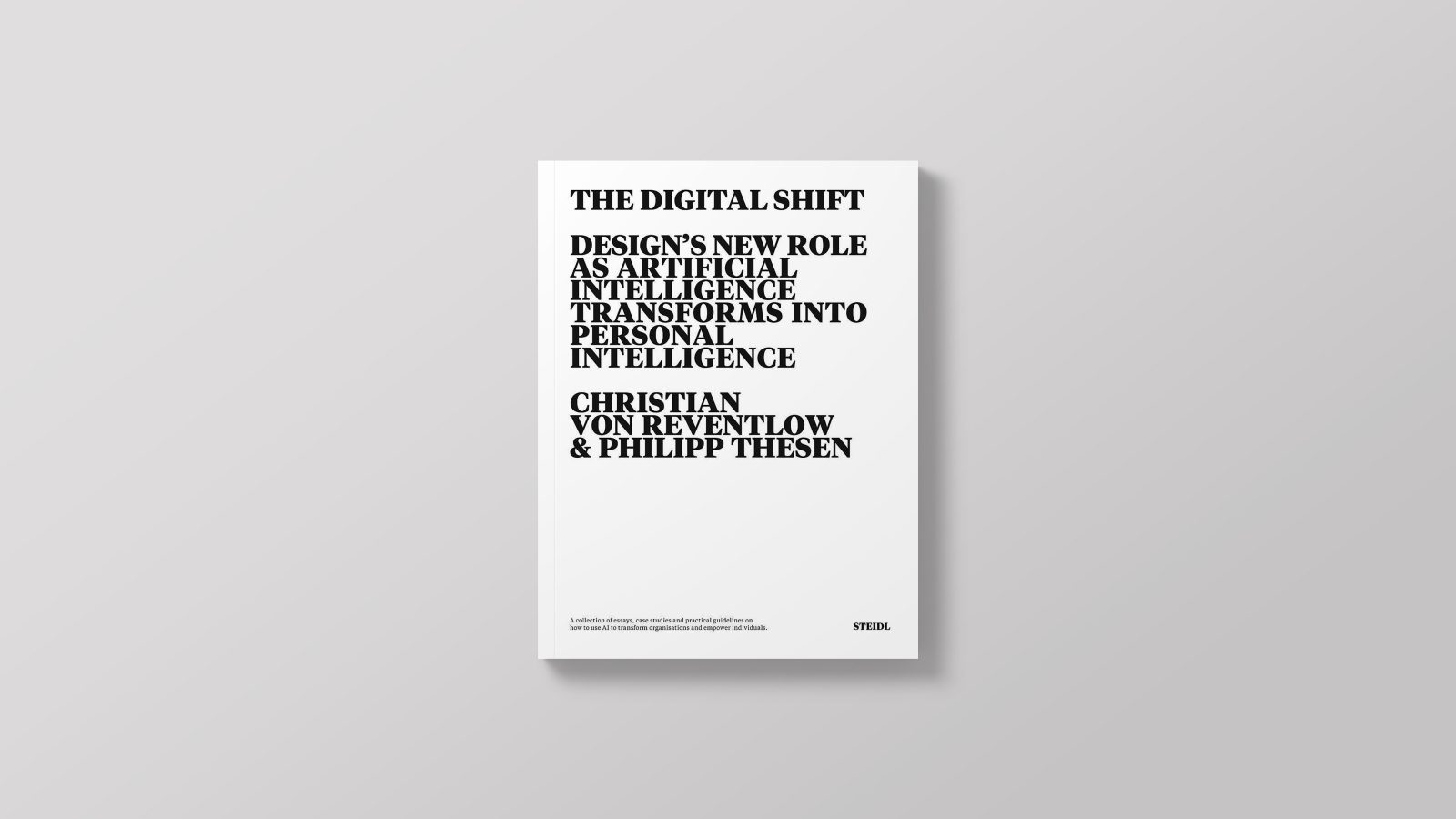
With the rise of digitisation and Artificial Intelligence, technology permeates all areas of life. For decades, countless technological futures have been imagined and visualised. Literature and Hollywood films have given rise to romantic yet critical cyborg visions. However, as the human-machine continuum becomes more and more digitised, real life is set to truly change. How work and home life blend is the most relevant issue with regard to this digital transformation. When society begins to run out of jobs due to automation, the human race will face radical change. Artificial Intelligence will determine our future. The crucial question is: will it serve (and be of service to) humans, or will it rule almighty over us?
This digital transformation of the economy, including all of its business models and products, could serve as the foundation for a new, consistently successful global prosperity paradigm. But in order to achieve this, the industry must finally start thinking radically from a human perspective. We will only succeed if we change our priorities. We do not wish to make machines appear harmless. Instead, we want to increase transparency regarding the effects of new technologies on our society. We should avoid reducing customers to products and instead celebrate them as sovereign consumers. We should not turn humans into passive objects of rapid economic and social changes driven by digitisation. On the contrary. We need to enable them to become self-determined agents in the useful application and smart use of these wonderful technologies.
We’re talking about nothing less than the comprehensive humanisation of technology. Artificial Intelligence must become civilised. It must be brought to a level of social, cultural and moral development that chimes with current social progress. The relatively recent debate about machine ethics with regard to autonomous vehicles and autonomous weapons shows that we are only beginning to explore this field. Many might object that the demand to domesticate the machine sounds quite archaic. However, one thing must be clear: the digital dog should never be allowed to bite its owner, or else the plug will be pulled.
In the long history of technology, all human inventions have been extensions of the human body and its skills. Numerous technological developments have reacted positively to human limitation: the hammer allows humans to extend force, automobiles allow us to travel further and faster. We must not forget that, for it to remain valuable, technology must be created with people in mind. Consider the history of computers. When they were initially created, they existed as huge, electronic, mainframe devices, sometimes filling whole rooms. Then, as technology progressed, we were able to make them smaller and completely alter their appearance. They broke free from huge cabinets and, in the guise of personal computers, settled on our desks. The computer transformed from being a heavy device for large-scale industrial application into a light and ubiquitous tool for personal and private use.
Artificial Intelligence must complete a similar transition, to what we call Personal Intelligence. Whereas it is currently a tool used only by the elite, Artificial Intelligence must become a tool for everyone – a technology that helps, not hinders humans from becoming sovereign agents and users who can profit directly from technological progress. Personal Intelligence stems from applying methods derived from user experience processes to Artificial Intelligence in a radical way. With User Experience (UX) we have a large toolbox at our disposal. UX enables us to look at things from the perspective of the user in a new and helpful way.
We propose a new formula for Personal Intelligence:
(PI): AI + UX = PI
In the near future, almost everyone will have a digital twin consisting of all their user experiences and interactions with digital services and products. The digital twin will represent the unique choices and tastes of every single user. Brands will speak to individuals directly, changing their off er depending on any one person’s specific needs. When this happens, brands won’t appeal to huge demographics, as they have done previously, but will target customer segmentations of one: the individual.
That is why the discipline of design must take on a crucial societal role: it must humanise technology. Innovators and designers will become mediators between technology and the living environment. As moderators within companies, they must mediate between the various entities involved. They must ensure that all development processes look beyond what is technically feasible: the consumer’s needs must come first. As the consumer’s advocate in our industry – an industry largely driven by engineering – the designer is in charge of empathy, of understanding what people need and creating ways to best meet their requirements.
Philipp Thesen, 2021.